

Source: morguefile.com and Wikimedia Commons
The True Cause of the Civil War—A Never-Ending Debate
If you’re in the mood to start a good argument, just ask someone a very simple question: “What caused the American Civil War?”
In many parts of the United States, especially in the South, that question is almost guaranteed to provoke impassioned and contradictory opinions. That’s because it’s a question that’s often answered based not on historical data but on a particular viewpoint someone wants to defend.
For example, here is what Kentucky Educational Television once said were the causes of the war:
- Unfair Taxation
- States’ Rights
- Slavery
What possible objective historical analysis could be cited to establish “unfair taxation” as the number-one issue that precipitated the Civil War?
Rankings like this raise the question of whether the issue being addressed is what actually happened in history or the needs and agenda of a particular constituency today. Since Kentucky, which remained in the Union, is often said to have become far more Confederate after the war than it ever was while the war was being fought, perhaps KET’s list isn’t so surprising after all.
How to Determine What Caused the Civil War
Given that any discussion of what caused the Civil War still, after more than 150 years, stirs strong emotions, is it even possible to arrive at any objective and historically credible answer to the question of what brought the war on? Actually, I think it is possible. The key is asking the right questions.
Rather than go head-on at the question of what caused the war, let’s approach it by asking two slightly different questions that I believe are easier to answer objectively:
- Was there any event or condition that in and of itself precipitated the war?
- What caused that precipitating event to occur?
What Precipitated the Civil War?
I define a precipitating event as one that was both necessary and sufficient to bring on the war.
- “Necessary” means that without it, there would have been no war.
- “Sufficient” means that, given political conditions at the time, this event by itself would inevitably lead to war.
Was there any event that occurred in the early 1860s that meets the test of being both necessary and sufficient to cause the onset of war?
Clearly, there was, and Abraham Lincoln put the spotlight directly on it in his first inaugural address. He said,
In your hands, my dissatisfied fellow-countrymen, and not in mine, is the momentous issue of civil war. The Government will not assail you. You can have no conflict without being yourselves the aggressors. You have no oath registered in heaven to destroy the Government, while I shall have the most solemn one to “preserve, protect, and defend it.”
What Lincoln was talking about was, of course, the secession from the Union that seven Southern states had proclaimed before he was even inaugurated.


Secession Triggered the War
The new president was affirming that without secession, the Federal Government would have no reason to “assail” its own citizens, and there would be no war. However, he wanted it clearly understood that he was absolutely committed to the nation doing whatever it took to prevent its own dismemberment. If secession could only be reversed by war, there would be war.
Had the Southern states not seceded, there would have been no war. But with Lincoln as president (I shudder to think what might have happened had Stephen Douglas won the presidency instead of Lincoln in 1860), war was inevitable unless the seceding states reversed their action. They didn’t.
So, what brought on the Civil War? Only one thing: secession.
That brings us to …
The Real Question: What Caused Secession?
It seems to me that the only way to bypass the all-too-common practice of 21st-century constituencies imposing their own perceptions and desires on 19th-century events is to allow those who were there to tell their own story. The best ones to answer the question of what brought on secession are those who argued for it, voted for it, and finally led their states to enact it.
The opinion shapers and political leaders who brought their states to take the momentous step of withdrawing from the United States were eager to explain why they believed it was necessary. Let’s allow them to speak for themselves.
For the sake of space, I have quoted excerpts from primary source documents. But it cannot be stated too strongly that these excerpts are fully representative not only of the documents from which they are taken but of Southern opinion as a whole. They reflect the sentiments expressed in the overwhelming majority of Southern newspapers, secession conventions, and public forums of all kinds on the eve of the war. Links to the complete documents from which the excerpts are drawn are provided. Bold print within an excerpt represents my added emphasis.
Southern Grievances That Motivated Secession
I would think there could be no more authoritative voices regarding why the South considered secession an unpalatable but necessary step than the men who were selected to lead the new Confederate government. President Jefferson Davis and Vice President Alexander Stephens spoke clearly and comprehensively about the issue.
Jefferson Davis

Source: senate.gov
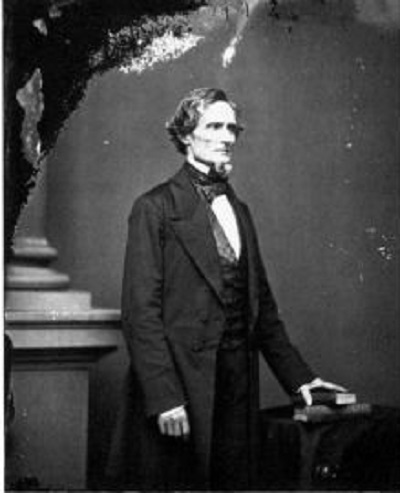
In his Message on Constitutional Ratification delivered to the Confederate Congress on April 29, 1861, Jefferson Davis echoes a theme that runs loudly and consistently through all the pro-secession commentary that occurred both before and during the war. After presenting arguments for the Constitutional right of any state to leave the Union at will, he went on, to sum up the South’s grievances against the North that caused the Southern states to choose to exercise that right:
In addition to the long-continued and deep-seated resentment felt by the Southern States at the persistent abuse of the powers they had delegated to the Congress, for the purpose of enriching the manufacturing and shipping classes of the North at the expense of the South, there has existed for nearly half a century another subject of discord, involving interests of such transcendent magnitude as at all times to create the apprehension in the minds of many devoted lovers of the Union that its permanence was impossible.
Although he mentions several causes of resentment, such as tariffs, taxes, and the like, Davis is clear that there is one singular issue, a grievance of “transcendent magnitude,” that convinced Southerners who had loved the Union “that its permanence was impossible.”
The right of property in slaves was protected by law. This property was recognized in the Constitution, and provision was made against its loss by the escape of the slave…
A persistent and organized system of hostile measures against the rights of the owners of slaves in the Southern States was inaugurated…the constitutional provision for their rendition to their owners was first evaded, then openly denounced as a violation of conscientious obligation and religious duty…owners of slaves (seeking to recapture escapees in the North) were mobbed and even murdered…laws were passed providing for the punishment, by ruinous fines and long-continued imprisonment in jails and penitentiaries, of citizens of the Southern States who should dare ask aid of the officers of the law for the recovery of their property.
Davis went on to say that Northern anti-slavery policies, by “rendering the property in slaves so insecure as to be comparatively worthless,” would cost the South billions of dollars. He contended that because the agricultural production of the South could only be carried on by slave labor, Northern antipathy toward slavery made secession the only viable option for the slave-holding states to avoid economic ruin.
Alexander Stephens

Source: Wikimedia Commons
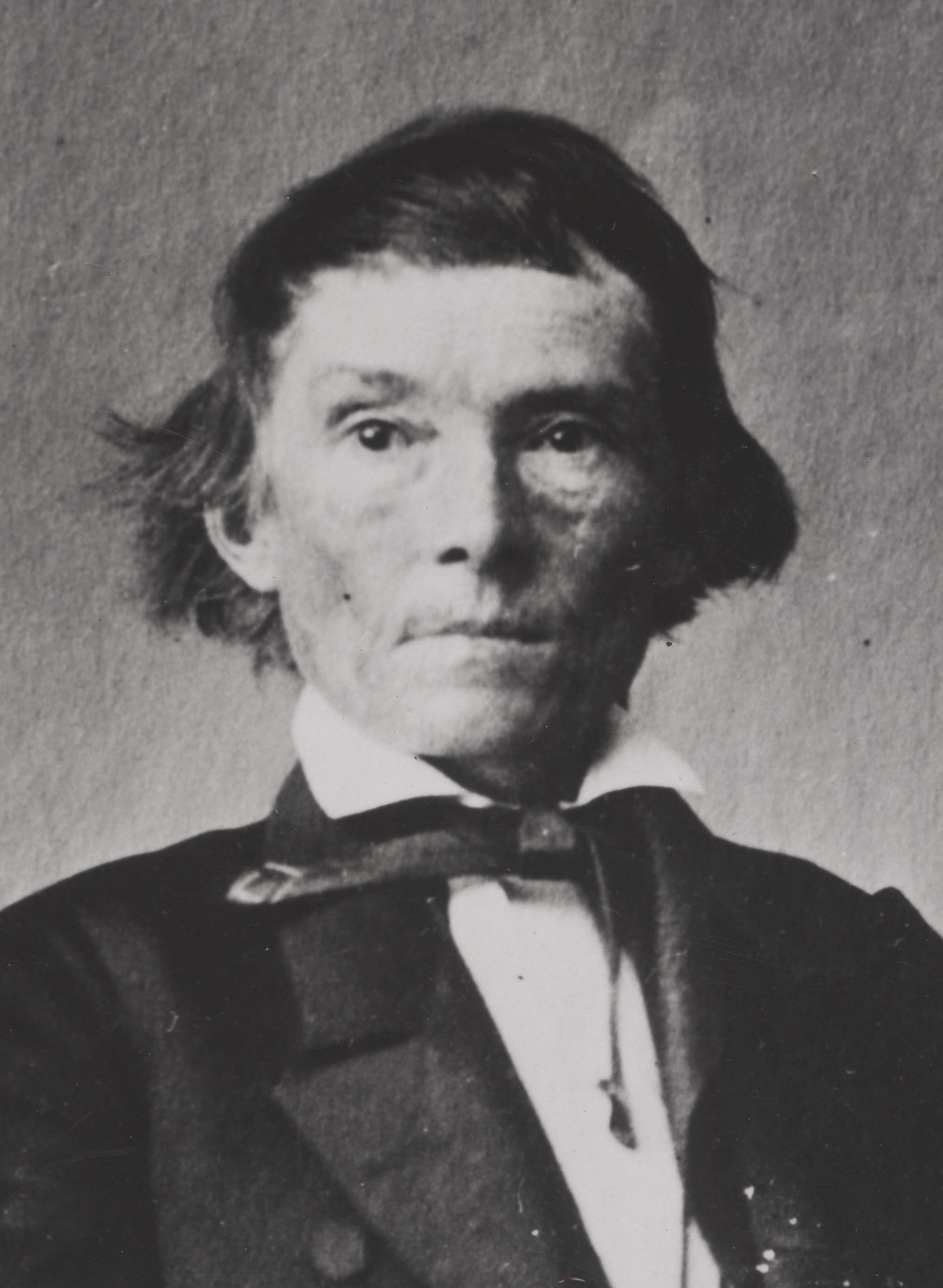
Confederate Vice President Alexander Stephens was no less direct and unequivocal in defining the reason for secession. Although he initially counseled against secession, once it was decided on and the Confederacy initiated, he became an eloquent defender of the course the Southern states were taking. In his famous and influential “Cornerstone” speech at Savannah, Georgia, on March 21, 1861, Stephens laid out both the rationale for secession and the justification for starting a new Southern government.
The new Constitution has put at rest forever all the agitating questions relating to our peculiar institutions—African Slavery as it exists amongst us —the proper status of the negro in our form of civilization.
This was the immediate cause of the late rupture and present revolution…
They assume that the negro is equal, and hence conclude that he is entitled to equal privileges and rights with the white man…*
Our new Government is founded upon exactly the opposite ideas; its foundations are laid, its corner-stone rests, upon the great truth that the negro is not equal to the white man; that Slavery, subordination to the superior race, is his natural and moral condition. [Applause.] This, our new Government, is the first, in the history of the world, based upon this great physical, philosophical and moral truth.
* I list this sentence ahead of where it appears in the speech to clarify the following paragraph.
The Importance of White Supremacy as a Reason for Secession
A critical element of Stephens’ rationale for secession is its focus on “the proper status of the negro” in the Southern social system. It is often argued that most soldiers who fought for the Confederacy were non-slaveholders and thus were not motivated by the desire to protect what Stephens called the South’s “peculiar institution.” Yet, in the war, the Southern press repeatedly urged non-slaveholders that their stake in slavery was even greater than that of slaveowners because slavery was the bulwark of white supremacy.
For example, in an editorial on the theme “Vote For Secession,” published on January 1, 1861, the Augusta (Georgia) Daily Constitutionalist listed what it considered to be the most persuasive reasons its readers should support their state leaving the Union.
The first of these was to “assert the freedom of the white, and the proper servitude of the black.” Included was a special “appeal to the women of the land. If they would keep our fair South free from the curse of negro equality, would keep the slave in the kitchen and cabin forever, and out of the parlor.”
The Election of Abraham Lincoln Triggered Secession
During the presidential campaign of 1860, many Southern newspapers urged that if Abraham Lincoln were elected, the South would have no choice but to leave the Union. It wasn’t so much that Southerners objected to Lincoln as a person but that his election signaled a national power shift that they considered a grave threat to their institutions.
A December 14, 1860 editorial called “The Policy of Aggression” in the New Orleans Daily Crescent was typical:
It is a mistake to suppose that it is the mere election of Lincoln…that has driven the States of the South into their…present determination to seek that safety and security out of the Union which they have been unable to obtain within it. The election of Lincoln is merely the confirmation of a purpose which the South had hoped would be abandoned by the opponents of slavery in the North. It is a declaration that they mean to…(weaken) the institution at every point where it can be assailed either by legislation or by violence, until, in the brutal language of Charles Sumner, “it dies like a poisoned rat in its hole.” The election of Lincoln…reiterates the intention of the party to destroy slavery.
Official Declarations by Southern States of Their Reasons for Seceding
Several of the seceding states wanted to make absolutely clear their reasons for the drastic step they took. So they adopted “Declarations of Secession,” consciously modeled after the US Declaration of Independence, to record for posterity what they considered their just causes for leaving the Union.
- South Carolina: Adopted December 24, 1860
An increasing hostility on the part of the non-slaveholding States to the institution of slavery, has led to a disregard of their obligations, and the laws of the General Government have ceased to effect the objects of the Constitution…
Those States have assumed the right of deciding upon the propriety of our domestic institutions; and have denied the rights of property established in fifteen of the States and recognized by the Constitution; they have denounced as sinful the institution of slavery…
- Georgia: Approved January 29, 1861
The people of Georgia…present to their confederates and the world the causes which have led to the separation. For the last ten years we have had numerous and serious causes of complaint against our non-slave-holding confederate States with reference to the subject of African slavery…
By their declared principles and policy they have outlawed $3,000,000,000 of our property in the common territories of the Union…
To avoid these evils we resume the powers which our fathers delegated to the Government of the United States…
- Texas: Adopted February 2, 1861
(Texas) was received (into the Union) as a commonwealth holding, maintaining and protecting the institution known as negro slavery– the servitude of the African to the white race within her limits– a relation that had existed from the first settlement of her wilderness by the white race, and which her people intended should exist in all future time…
They demand the abolition of negro slavery throughout the confederacy, the recognition of political equality between the white and negro races, and avow their determination to press on their crusade against us, so long as a negro slave remains in these States…
For these and other reasons…We the delegates of the people of Texas, in Convention assembled, have passed an ordinance dissolving all political connection with the government of the United States of America and the people thereof.
- Mississippi: Adopted January 9, 1861
A Declaration of the Immediate Causes which Induce and Justify the Secession of the State of Mississippi from the Federal Union…
Our position is thoroughly identified with the institution of slavery— the greatest material interest of the world. Its labor supplies the product which constitutes by far the largest and most important portions of commerce of the earth…There was no choice left us but submission to the mandates of abolition, or a dissolution of the Union, whose principles had been subverted to work out our ruin.
What Did the Confederates Say Caused the Civil War?
The leaders who brought on the Civil War by attempting to take their states out of the Union were very clear about their motivations. They were overwhelmingly concerned about preserving one social and economic institution. In the documentation they very carefully crafted to make their thinking clear to posterity, nothing else even comes close.
Why did Southern states secede from the Union, thereby making the Civil War inevitable? Mississippi’s declaration of the causes of secession sums up the answer to that question very succinctly:
“Our position is thoroughly identified with the institution of slavery.”
Related Articles
- The Fall of Richmond in the American Civil War: The Inside Story
What happened inside Richmond as the Confederacy collapsed in April 1865? Diaries reveal fear, fire, and despair during the Union occupation. - Why Abraham Lincoln Refused to Respect Jefferson Davis
Why Abraham Lincoln never called Jefferson Davis “president” and how that decision shaped Union strategy and denied legitimacy to the Confederacy. - Abraham Lincoln’s Masterclass In Leadership: Letters To Civil War Generals
Abraham Lincoln mentored his generals through letters, guiding Union Army leadership and shaping strategies that won the war.
Note: This post is an update of an article originally published on HubPages.
© 2013 Ronald E. Franklin